







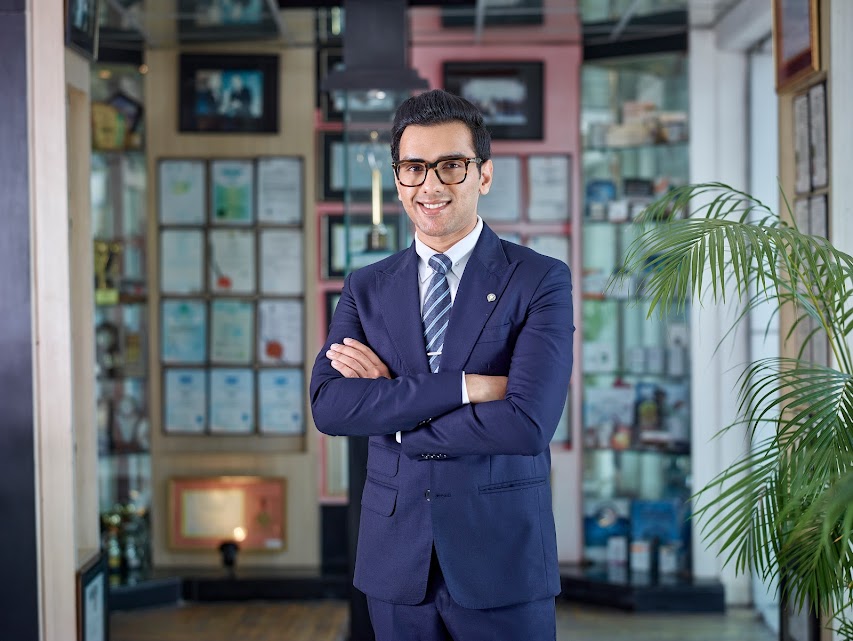
New Delhi, January 02, 2026: “2025 felt like a quiet reset for Indian pharma. Exports and policy support remained important, but the more meaningful shift was in what people focused on inside companies and hospitals. The questions moved from how much we produce to whether the medicines we make deliver reliable outcomes for patients, especially in infectious diseases where antimicrobial resistance is now part of daily practice.
At the same time, AI stopped being a buzzword and started to become the plumbing for how we read data, design studies and run operations. At Venus Remedies, our work on programmes like MET X and VRP 034, alongside the digital and AI systems we are building, reinforced a simple lesson: quality in science, quality in manufacturing and quality in decision making will define leadership in the next phase. As we look to 2026, those who combine serious evidence with responsible use of technology will set the pace.”
DETAILED INPUTS
Year-Ender 2025 Note by Mr. Saransh Chaudhary, President, Global Critical Care, Venus Remedies and CEO, Venus Medicine Research Centre
Looking back, 2025 felt like an inflection point for Indian pharma in more ways than one. Yes, exports continued to grow and policy support stayed strong, but what stood out to me was a change in the questions people were asking. The conversation began to move from “how much can we make” to “does it truly work for patients, and can we prove it with good data.” Quality stopped being a checklist item and became the real differentiator.
India’s position as a global supplier of vaccines and essential medicines is now well established. That did not happen by accident. It came from years of building manufacturing discipline, regulatory trust and a basic respect for process. In 2025, I felt a similar seriousness begin to touch other parts of the ecosystem as well. The work around PLI, bulk drug parks and testing infrastructure is slowly correcting structural gaps that were ignored for too long.
At the same time, antimicrobial resistance has moved from academic discussion to everyday reality. Anyone who spends time in hospitals can see it. Treatments that once worked fail more often, and the clinical room for error is shrinking. For us at Venus Remedies, this is very real. Critical care antibiotics sit at the center of what we do, and our decisions have to hold up in the ICU, not just on paper. This is the lens through which we pushed forward on programmes like MET X and VRP 034 this year. MET X, in partnership with Infex Therapeutics, is our effort to rebuild options against metallo beta lactamase driven resistance, and the US FDA QIDP designation for VRP 034 was an important validation of the science and the team behind it.
But if I had to pick one theme that defined 2025 for me personally, it would be AI. It shifted from being a future idea to something that is already rewiring how we work. At VMRC and across Venus Remedies, AI is now part of how we read data, design studies, manage complexity in the supply chain and even how we build digital experiences for patients through platforms like RESET and Davai. Some of this is still early, but the direction is clear. The companies that learn to pair deep domain expertise with thoughtful use of AI will move faster, make fewer errors and serve patients better.
For me, quality is the thread that runs through all of this. Quality in manufacturing, so that every batch leaving a plant is something you can stand behind. Quality in research, so that claims are backed by robust models and honest data. Quality in talent, so teams are comfortable with both biology and computation. And quality in technology, so that digital systems simplify decisions rather than add noise.
As we step into 2026, I do not expect the questions to get easier. Regulators will expect stronger evidence. Health systems will look harder at outcomes, not just availability. AI will raise the bar on what good looks like in both science and operations. That is a healthy pressure. Indian pharma will be judged less on slogans and more on how reliably it delivers real benefit to patients.
My own hope is that we keep leaning into the hard work: better data, better tools, better science and better execution. If we can do that with consistency, India will not just remain the pharmacy of the world in volume terms, but will increasingly be trusted for the quality and seriousness behind its work.


