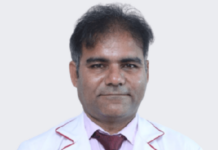








Mumbai, April 27, 2026: In a remarkable example of advanced medical care and multidisciplinary coordination, a 73-year-old patient has successfully regained his voice after nearly 19 years, following a complex Type I Thyroplasty procedure performed by Dr. Chandraveer Singh, Consultant ENT and Head and Neck Onco Surgeon with Dr. Sheetal Radia, Consultant ENT and Head and Neck Onco Surgeon, and his team at Wockhardt Hospitals, Mira Road. The patient had lost his voice after undergoing a quadruple heart bypass surgery in 2007. While the cardiac surgery saved his life, it led to a rare but serious complication—damage to the Left Recurrent Laryngeal Nerve, which controls the vocal cords. This caused paralysis of the left vocal cord, leaving the patient with a weak, breathy voice, severe fatigue while speaking, and persistent difficulty swallowing for nearly two decades. These symptoms were often overlooked due to his multiple ongoing health conditions, significantly affecting his quality of life.
The case was highly challenging due to the patient’s complex medical history, which included Chronic Kidney Disease with high creatinine levels, diabetes, hypertension, fluid overload, pleural effusion, ascites, and a previous major cardiac surgery. Due to these conditions, general anesthesia posed a significant risk, making conventional surgery unsafe. However, the multidisciplinary team at Wockhardt Hospitals, Mira Road carefully evaluated the patient and planned a safe and effective approach.
Given the high-risk profile, the surgical team performed an Awake Type I Thyroplasty under local anesthesia. The procedure involved creating a small window in the thyroid cartilage and inserting a specialized implant to push the paralyzed vocal cord toward the center so that the functioning vocal cord could make proper contact and produce a clear voice. Since the patient remained awake during the procedure, the team was able to assess and improve the voice in real time while adjusting the implant, ensuring optimal results. Dr. Rohit Kateliya, Anesthetist, played a crucial role in ensuring the procedure was safely conducted despite the patient’s high-risk medical condition. His expertise helped maintain the patient’s stability throughout the awake surgery, contributing significantly to its success.
Dr. Chandraveer Singh said, “Voice loss after major heart surgery due to nerve damage is rare but life-altering. Many patients learn to live with it, thinking it cannot be treated. This case shows that even in high-risk patients with multiple health conditions, voice can be safely and effectively restored with the right planning, team approach, and surgical expertise.”
Healthcare experts emphasize that any hoarseness, weak voice, or voice fatigue lasting more than two to three weeks should not be ignored and must be evaluated by an ENT specialist, as early diagnosis and treatment can significantly improve quality of life.
Corporate Comm India (CCI Newswire)